London’s most talked-about steak restaurant isn’t hiding behind a velvet rope in Mayfair. It’s a one-night pop-up in Shoreditch, and the meat comes from a supermarket.
That’s the premise Cow PR built for Asda, and it worked spectacularly. Within days, the story landed in The Grocer, the Mirror, LadBible, Time Out London, and Grocery Gazette. Meanwhile, Asda’s own newsroom couldn’t stop talking about it either.
So how did a supermarket chain manage to out-hype London’s priciest steakhouses, if only for one night? This Cow PR case study breaks down exactly how Cow PR engineered that moment, and more importantly, why it worked so well.
What the Steak Bay Campaign Actually Was
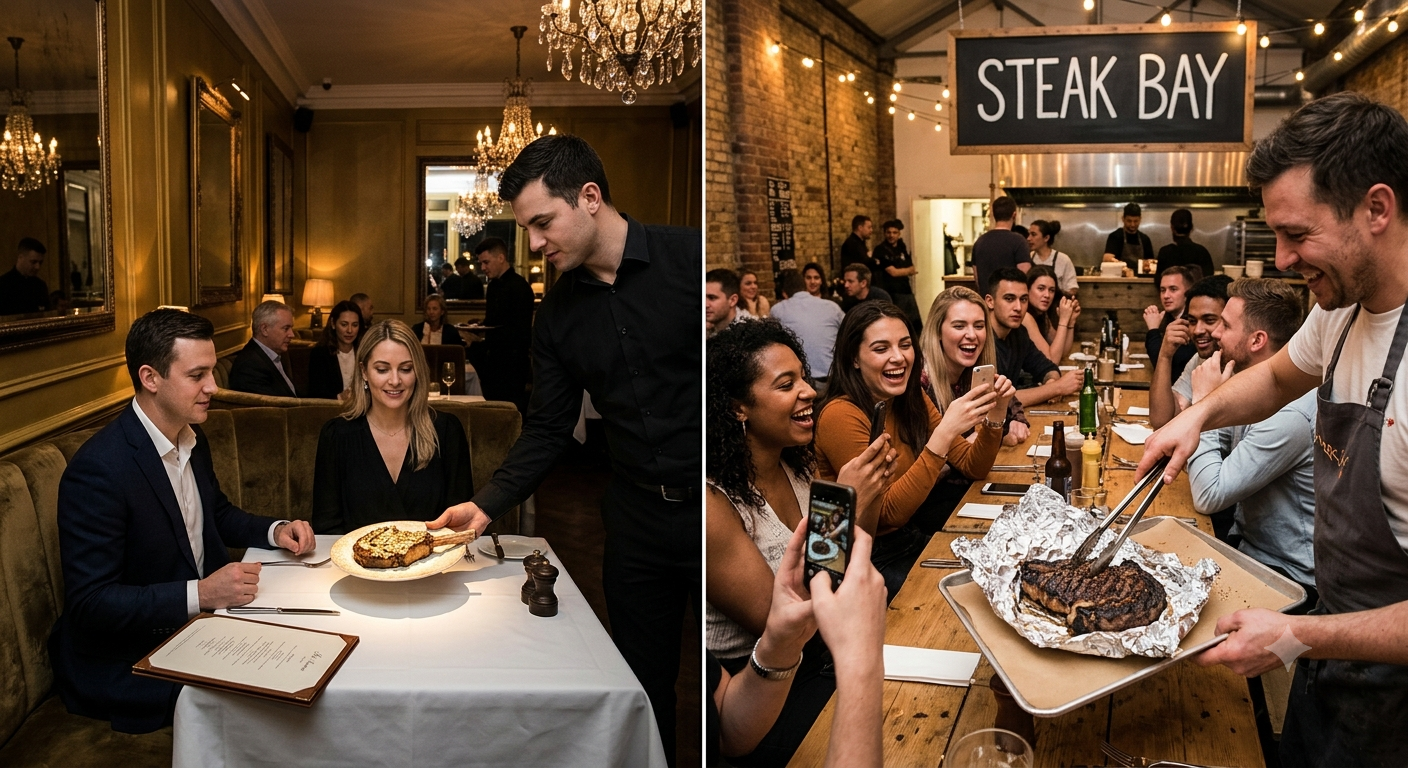
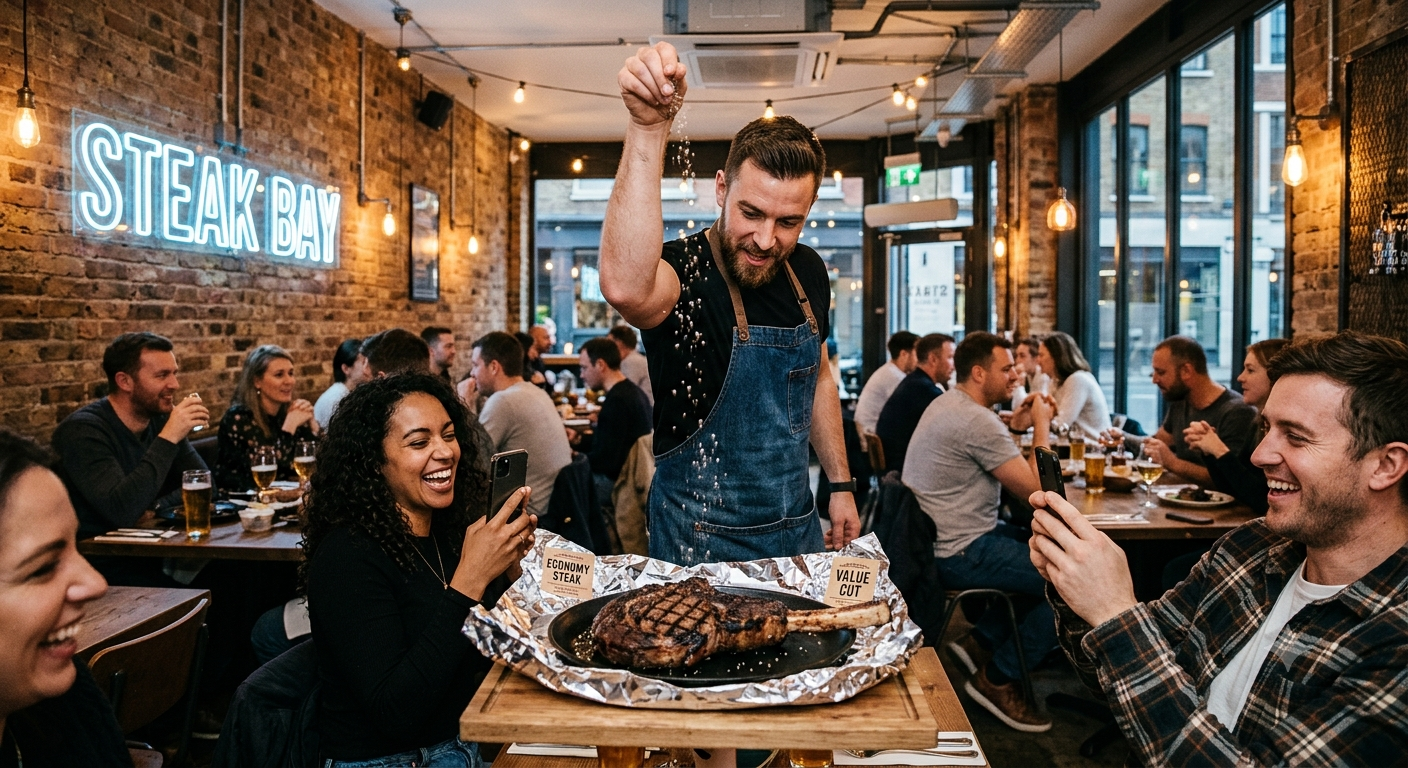
At its core, Steak Bay was a one-night-only pop-up restaurant that opened in London’s Shoreditch neighborhood on June 9, 2022.
The venue, Iron Bloom on Great Eastern Street, hosted fifty lucky diners who were selected entirely at random through an online ballot on Asda’s website.
However, the concept ran deeper than a simple giveaway. Cow PR built Steak Bay as a direct, cheeky answer to Nusr-Et, the London restaurant made famous by celebrity chef Salt Bae and his eye-wateringly expensive, gold-leaf-topped steaks.
A few details made the parody land:
- The name itself played on “Salt Bae,” turning it into “Steak Bay” for an unmistakable, instantly memeable hook
- Tinfoil replaced gold leaf, a deliberate wink at Salt Bae’s extravagant plating style
- Trained waiting staff seasoned each steak tableside, mimicking the theatrical flourish Salt Bae is famous for
- Every dish was free, the exact opposite of Nusr-Et’s four-figure bills
Consequently, journalists didn’t need much convincing to run the story. The contrast alone did most of the work before a single pitch email went out.
The Brief — Why Asda Needed More Than a Supermarket Ad
The retailer introduced a new Ultimate Extra Special line, featuring 21-day-matured tomahawk steaks and 30-day-matured sirloin cuts, alongside British beef steak burgers and slow-cooked pork rib racks.
Asda had genuinely upgraded its meat, fish, and poultry range that summer.
Gavin Warburton, Asda’s senior director of meat, fish and poultry, put the challenge plainly at the time, noting that the retailer wanted customers to know these premium cuts didn’t require restaurant prices to deliver restaurant quality.
Supermarket meat, fairly or not, still carries a perception problem compared to restaurant-quality cuts, especially among younger, socially engaged diners who associate steak nights with Instagrammable experiences rather than weekly shopping trips.
That’s a claim easy to make and hard to prove through advertising alone.
Therefore, Asda needed a way to physically prove the quality upgrade rather than simply claim it. That meant giving people a real reason to taste, see, and talk about the product, ideally somewhere unexpected and worth photographing
Cow PR Case Study: How Cow PR Built the Idea
The Salt Bae Cultural Hook
Salt Bae’s viral salt-sprinkling routine, combined with his restaurant’s outrageous pricing, had become a running joke across social media for years, complete with viral footage of celebrities reacting to their bills.
By referencing that exact cultural touchstone, Cow PR gave journalists an instant, ready-made headline.
“Britain’s cheapest steak restaurant” against “the world’s most expensive” wrote its own comparison, which made the story effortless to cover without requiring lengthy explanation.
Rather than sending out a press release describing the new meat range, Cow PR built something people could physically walk into. The pop-up used real theatrical touches, all executed with genuine craft rather than gimmick:
- Dishes prepared and plated by Asda’s own executive chef and senior director of innovation, Jonathan Moore
- Steaks rested in tinfoil before being seasoned tableside, echoing fine-dining ritual
- A menu certified by the Good Housekeeping Institute, lending third-party credibility to the quality claim
- Prices on the wider retail range starting as low as £5, reinforcing the affordability message beyond the free pop-up itself
As a result, the campaign gave influencers, food writers, and reality TV personalities something genuinely shareable.
A free steak dinner with a story attached travels much further on social media than a static image of packaged meat ever could.
The Results — Coverage, Reach, and Reaction
According to Cow PR’s own case study, Steak Bay secured coverage across several major outlets, while feeding more than 200 people Asda’s premium range across the pop-up and its accompanying food truck activation.
The payoff came quickly and clearly.
Here’s what the campaign delivered:
- National and trade press coverage, including The Grocer, the Mirror, LadBible, Time Out London, and Grocery Gazette
- More than 200 people fed directly through the pop-up and its van-based extension
- Millions of impressions, driven almost entirely by earned media rather than paid placements
- Corroborated coverage from Asda’s own newsroom, which independently confirmed the campaign’s scale and intent
Consequently, the campaign achieved something advertising struggles to deliver: third-party validation.
When The Grocer and Time Out both chose to cover a supermarket steak stunt unprompted, that’s earned trust money simply cannot buy.
Cow PR Case Study: Why This Campaign Worked (The PR Lessons)
Several factors combined to make Steak Bay land as well as it did. Understanding each one helps explain why the campaign traveled so far beyond a single night in Shoreditch:
- Cultural attachment over invention. The idea borrowed relevance from something already trending, rather than trying to manufacture interest from nothing.
- A visual, quotable concept. A one-night pop-up with a cheeky premise practically writes its own headline, which makes a journalist’s job easier and a pitch harder to ignore.
- Authenticity behind the joke. Asda really had upgraded its meat quality, so the stunt wasn’t selling a gimmick disconnected from reality.
- Built-in third-party credibility. The Good Housekeeping Institute endorsement provided independent backing for the “quality” claim beyond Asda’s own marketing language.
- A built-in scarcity hook. One night, fifty seats, and a random ballot created urgency that a permanent activation couldn’t replicate.
Together, these elements moved the story past a routine product launch and into something press outlets wanted to cover on its own merit.
What This Reveals About Cow PR’s Approach
The agency’s broader portfolio, spanning drinks brands like Kraken Rum and Heineken alongside food-and-beverage clients, consistently favors physical, experiential ideas over traditional press releases.
Steak Bay isn’t an isolated example for Cow PR
This pattern suggests a clear house philosophy: earned media works best when it gives people something to actually do, not just something to read.
Whether that’s a themed pop-up, a branded experience, or a cultural stunt, the common thread stays the same: participation drives coverage far more reliably than announcements do.
For food and beverage brands specifically, this approach offers a useful blueprint. A supermarket range, however improved, rarely generates headlines on its own merit.
Wrapping it inside an experience people want to attend, however, changes the equation entirely.
Final Takeaways for Brands Considering Earned-Media Stunts
The Steak Bay campaign demonstrates that earned media still holds real power in a saturated advertising landscape, provided the underlying idea connects to something audiences already care about.
Cultural relevance, in this case, a well-known celebrity-chef parody, did much of the heavy lifting before a single journalist even got involved.
Before greenlighting a similar stunt, brands should ask themselves:
- Does this idea attach to something already in the cultural conversation, or does it require lengthy explanation?
- Can the product claim survive scrutiny once press and influencers show up in person?
- Is there a built-in visual moment that photographs or films well without extra production?
- Does the activation include some form of independent credibility, whether that’s an award, certification, or expert endorsement?
Equally important, the campaign backed its joke with a genuine product improvement, which kept the coverage credible rather than gimmicky.
Ultimately, Steak Bay shows that a great London campaign strategy doesn’t require a massive budget or a celebrity endorsement deal.
It requires a sharp cultural insight, a product that backs up the claim, and the confidence to let people taste the difference for themselves.