Not every PR agency sets out to make the news. Most aim to manage it.
Frank PR, however, built its entire identity around the idea that brands should start conversations people actually want to have.
The Frank UK viral campaign approach did not rely on big budgets or traditional advertising.
Instead, it focused on generating earned attention through ideas that felt worth talking about.
This article examines how Frank PR developed that model, what made specific campaigns work, and what the results revealed about the way consumer PR functions in the UK today.
Background: What Frank PR Is and Where It Came From
Frank PR is an independent agency based in London.
Graham Goodkind and Andrew Bloch founded it in 2000.
From the beginning, the agency positioned itself around a concept it called “Talkability,” which it eventually registered as a trademark.
The idea behind Talkability was straightforward: a campaign only works if people discuss it beyond the initial press release.
Over the following two decades, Frank PR built a client list that included consumer brands across food, drink, retail, and lifestyle.
The agency focused on earned media, meaning coverage that brands did not pay for directly.
Additionally, it developed capabilities in social media management, influencer partnerships, experiential events, and reactive PR, which involves responding quickly to news or cultural moments.
Therefore, Frank PR sat in a specific part of the UK PR market: agencies that treated creativity as the primary tool rather than media spend.
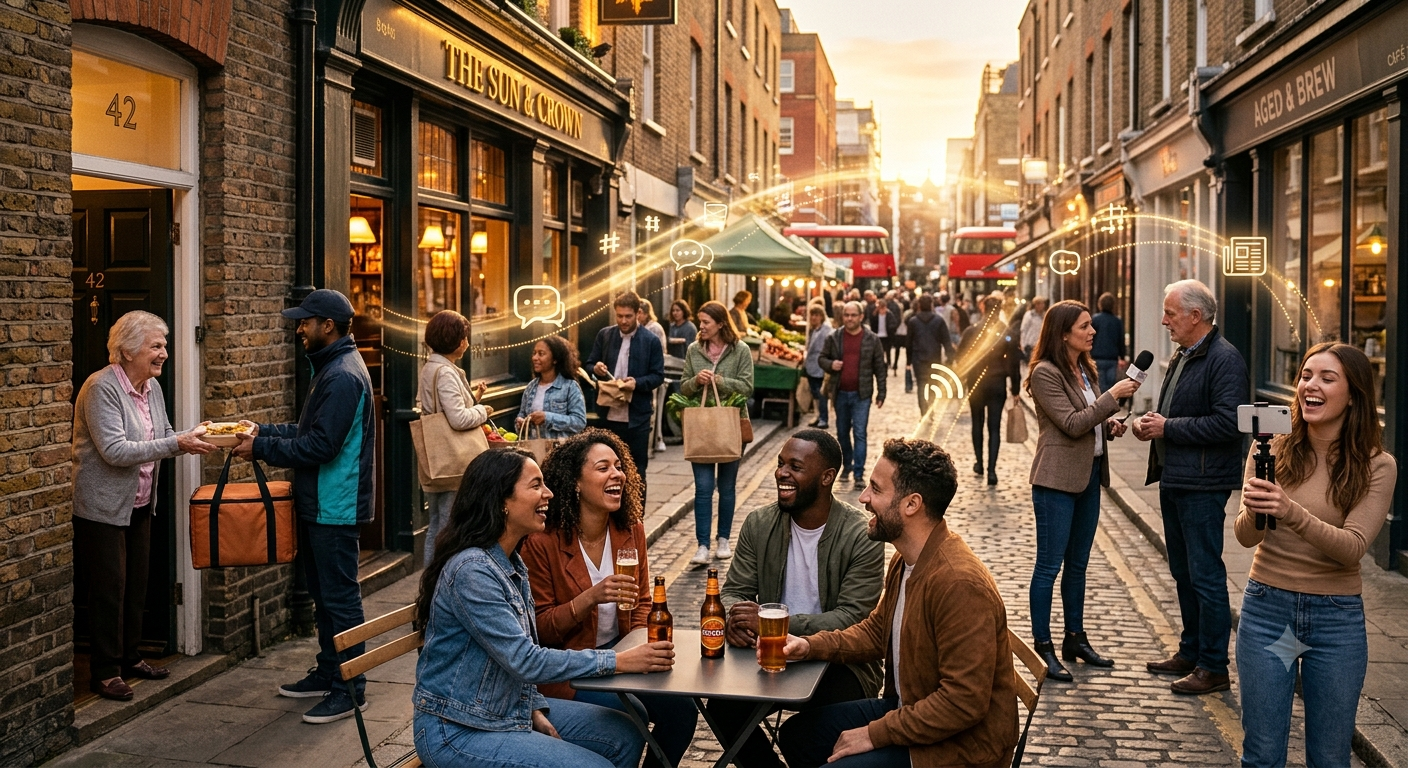
Frank UK Viral Campaign: The Consumer PR Landscape, Frank PR Entered
The UK media environment rewards novelty. National newspapers, morning television programs, and social platforms all respond to stories that feel fresh or surprising.
As a result, consumer brands that could generate those moments gained coverage that money alone could not buy.
However, that space was competitive. Several London-based agencies pursued the same kind of attention-driven work.
What distinguished a successful UK viral PR campaign from one that landed flat was largely a question of timing, cultural relevance, and the willingness to take creative risks.
Frank PR understood this environment well.
The agency developed a reputation for reading the news cycle and finding ways for client brands to participate in it without appearing to force their way in.
Frank UK Viral Campaign: How Frank PR Engineered Conversation
The agency’s approach rested on a few consistent principles.
First, ideas had to be simple enough to explain in one sentence.
Second, they had to give people a reason to share them, whether through humor, surprise, or genuine usefulness.
Third, campaigns worked best when they tapped into something people were already discussing.
The Frank UK viral campaign model relied heavily on the following:
- Earned media placement: getting journalists and broadcasters to cover a story without payment
- Social-first thinking: designing content for platforms where sharing happens naturally
- Reactive speed: responding to cultural moments before they passed
- Distinctively simple ideas: avoiding complexity that would slow a story down
Additionally, the agency treated brand personality as something to be consistently protected and developed.
A brand that shifted tone between campaigns lost the recognition that made any single piece of content land harder.
Case Study: The Weetabix and Heinz Beans Campaign
The most widely cited example of a frank UK viral campaign came in February 2021.
Weetabix posted an image on social media showing Heinz baked beans poured over Weetabix cereal.
The caption framed it as a straightforward breakfast suggestion.
The response was immediate and enormous.
People rejected the combination with genuine outrage; others defended it with equal energy, and within hours, the post had generated over one million shares.
Media outlets picked it up. Other brands joined the conversation on social media, including Innocent Drinks, Pfizer, and British Airways, each reacting in character.
Politicians commented. The story reached the House of Commons.
The campaign cost very little to execute. There was no media buy, no celebrity involvement, and no elaborate production.
The mechanism was a single image and a deliberate provocation.
However, because the provocation was harmless and funny, it invited participation rather than generating backlash.
This is central to understanding the Frank UK viral campaign developed. The goal was not to shock people into silence but to give them something to react to.
The Weetabix post worked because it created a clear and low-stakes debate.
People could pick a side, share their view, and feel part of something without any real consequences.
The outcome, therefore, was not just awareness for Weetabix. It demonstrated how consumer brands could use social media as a participation tool rather than a broadcasting one.
Case Study: Innocent Drinks and the Value of Brand Voice
Frank UK viral campaign PR’s work with Innocent Drinks focused on a different challenge.
Innocent was already a recognizable brand with an established personality.
The PR task was to maintain that personality across earned media without making the brand feel like it was trying too hard.
The strategy Frank developed centered on conversational content, community engagement, and humor that felt genuinely warm rather than corporate.
The UK creative PR case study that emerged from this work showed how consistency matters as much as novelty.
A brand that sounds the same across every touchpoint builds familiarity, and familiarity encourages trust.
Additionally, the Innocent work showed how consumer brand viral success did not always come from a single explosive moment.
Sometimes it came from a sustained personality that people chose to follow because it was genuinely enjoyable.
This is a less discussed but equally important dimension of consumer PR strategy.
Case Study: Riverford and Purpose-Led Communication
Riverford organic farmers took a different path.
The brand worked with Frank PR on a campaign called #GetFairAboutFarming, which addressed food pricing and the treatment of farmers in the UK supply chain.
The Frank UK viral campaign connected Riverford’s ethical positioning to a broader public conversation about where food comes from and who bears the cost of producing it.
This London campaign strategy demonstrated that viral attention does not require humor or spectacle.
Sometimes a campaign spreads widely because it touches on something people feel strongly about and have not seen articulated clearly before.
The Riverford campaign asked consumers to think about a structural issue through the lens of a brand that had genuine credibility on the subject.
As a result, coverage came from farming media, national newspapers, and food publications.
The campaign reinforced Riverford’s identity as a company with principles rather than simply a delivery service for organic vegetables.
Frank UK Viral Campaign: Estrella Galicia and Cultural Identity
Estrella Galicia used Frank PR for positioning work in the UK market.
The campaign was built around a simple distinction: Estrella Galicia is genuinely Spanish, not a version of Spanish adjusted for foreign markets.
The “Spanish Not Span-ISH” framing gave the brand a clear story and a tone of mild defiance that resonated with consumers looking for authenticity.
This brand-building example showed how UK consumers respond to specificity. Vague claims about heritage or quality are common and therefore unremarkable.
A brand that draws a sharp line between itself and its competitors and does so with humor gives people something to remember and repeat.
Therefore, the Estrella Galicia work illustrated the principle that a distinctive voice matters more than volume.
The Frank UK viral campaign did not dominate the news cycle, but it built recognition in a crowded drinks category.
Case Study: Wiltshire Farm Foods and Emotional Storytelling
Wiltshire Farm Foods presented a different kind of brief. The brand serves older customers and people with specific dietary needs, often in circumstances involving illness, isolation, or reduced mobility.
The PR challenge was to generate awareness without trivializing the realities of its customers’ lives.
Frank PR developed a campaign focused on the human value of connection and the role that food plays in daily well-being.
The approach used emotional storytelling through broadcast and press, drawing attention to loneliness among people older than 70 in the UK.
The Frank UK viral campaign generated coverage that brought the brand to audiences who had never heard of it while reinforcing its credibility among those who already used it.
This consumer brand’s viral success came not from humor or controversy but from genuine emotional resonance.
It demonstrated that a UK viral PR campaign does not require a single formula. The mechanics differ depending on the brand, the audience, and the moment.
What These Campaigns Have in Common
What These Campaigns Have in Common
Looking across these examples, a few clear patterns emerge.
Frank PR did not use the same formula for every client, but the thinking behind each campaign followed the same logic. Each idea was simple, participatory, and true to the brand it represented.
Specifically, every campaign shared these qualities:
- A clearly defined idea: each campaign had one central point that anyone could grasp immediately, with no complicated messaging or layered objectives
- Low barrier to participation: audiences could engage by sharing, commenting, reacting, or simply talking about it with someone else
- Respect for brand identity: Frank UK’s viral campaign PR did not push a single tone across all clients; instead, it found the kind of attention that fit each brand’s personality naturally
- Conversation over spending: none of the campaigns depended on large media budgets; the idea itself did the work
Over more than two decades, Frank PR built a consistent body of work that applied this philosophy with different creative tools across different categories.
The goal, however, stayed the same throughout: generate genuine conversation through ideas rather than paid reach.

Frank UK Viral Campaign: What This Model Reveals About Consumer PR
The Frank UK viral campaign approach reflects a broader shift in how consumer brands communicate.
Audiences have become increasingly resistant to advertising that presents itself as advertising.
Earned media, by contrast, reaches people through channels they choose to engage with. A news story, a social post, or a conversation among friends carries credibility that a paid placement cannot replicate.
However, earned media is harder to control and harder to predict.
A frank UK viral campaign that aims for conversation might land flat. One that triggers debate might tip into controversy.
The skill, therefore, lies in finding ideas that are interesting without being alienating, relevant without being obvious, and simple enough to travel without losing meaning.
Frank PR developed that skill over many years and many campaigns. The results were not always enormous.
Not every brief produced a moment that reached Parliament or generated a million shares overnight.
However, the accumulated body of work showed that a consistent earned-first strategy builds brand recognition that outlasts individual campaigns.
Conclusion: A London Campaign Strategy Built on Conversation
Frank PR did not invent the idea of making brands part of public conversation.
However, it developed a clear and repeatable approach to doing so in the UK consumer market.
The Frank UK viral campaign model centered on simplicity, cultural relevance, earned media, and a genuine understanding of what drives people to share.
The case studies examined here, from the Weetabix beans moment to the Riverford farming campaign, show that viral attention comes in many forms.
What they share is an understanding that people engage with ideas, not announcements.
A brand that gives its audience something to think about, argue over, or laugh at earns a different kind of attention than one that simply presents its own credentials.
That distinction remains central to what made Frank UK’s viral campaign PR’s approach worth examining, and it continues to inform how consumer PR agencies in the UK think about the relationship between creativity and results.