Splendid Communications has never published a case study for a named restaurant client.
What follows fills that gap deliberately, applying the agency’s own documented methodology, the one built for Greggs, Walkers, and Ginsters, to the genre it would most naturally serve next: the independent neighborhood restaurant launch.
You could call it an applied case study, built from real agency mechanics rather than a retelling of one actual opening night.
A Neighborhood Restaurant With No Name Recognition
Picture a chef-owned bistro opening in a competitive London postcode, with genuinely great food and zero public awareness. That’s the exact gap a Splendid Communications hospitality launch strategy is built to close.
The core problem isn’t quality. It’s attention. Diners can’t book a table at a restaurant they’ve never heard of, no matter how good the cooking is.
Consequently, the brief for this genre always starts the same way: manufacture relevance before manufacturing reservations.
This challenge sits at the heart of most independent restaurant launches, not just this one. Rent is fixed the moment the lease is signed, yet awareness has to be built from nothing in a matter of weeks.
That mismatch is exactly why restaurant launch success depends so heavily on the strategy behind opening night, not just the menu itself.
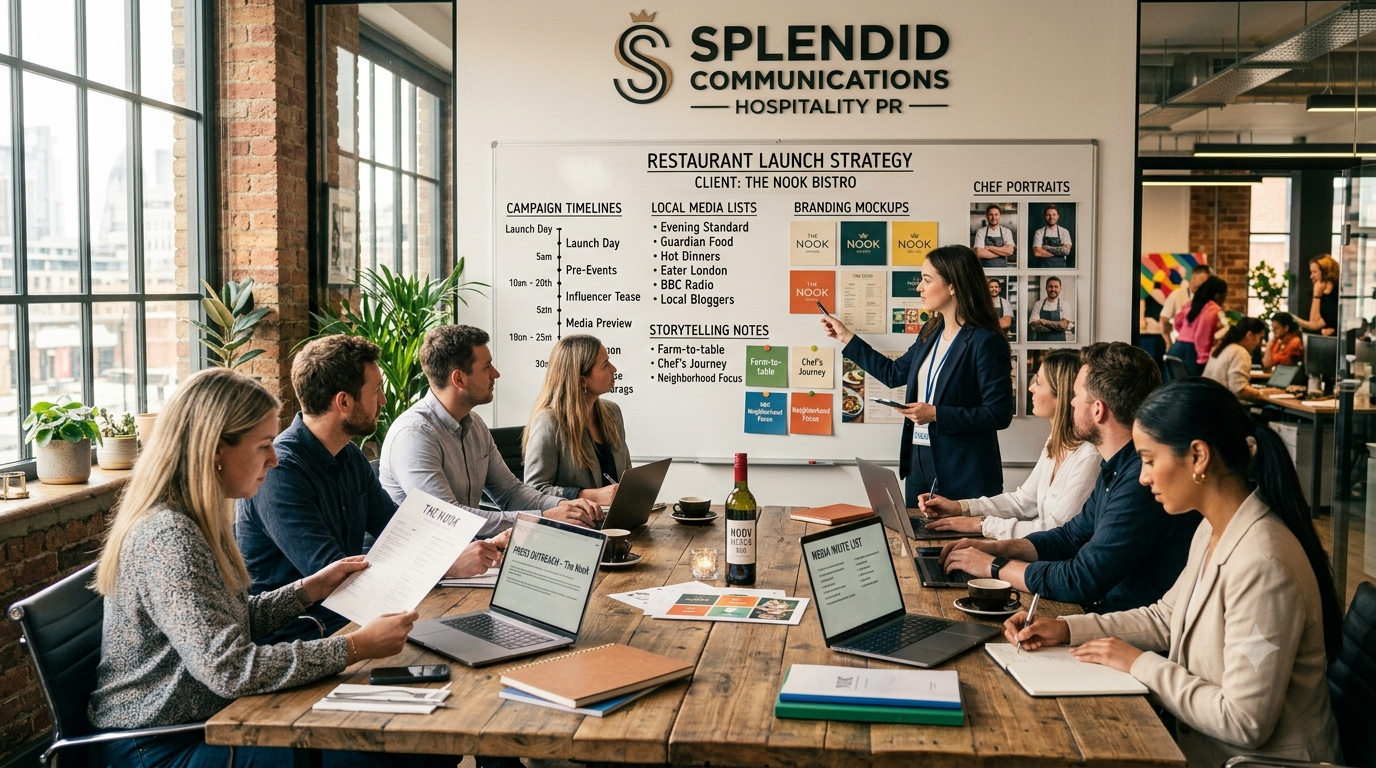
Snapshot
- Sector: Independent hospitality, single-site restaurant
- Core challenge: Zero brand awareness ahead of opening night
- Agency approach applied: Splendid’s people-first creativity, run through its COUNT framework
- Primary goal: Convert local curiosity into a fully booked launch month
The Strategy: People-First Creativity Applied to Food
Splendid Communications built its reputation on one guiding belief.
Brand stories only travel when they reflect real people living real lives, not polished marketing language. Applied to hospitality brand building, that belief reshapes the entire campaign brief.
Instead of leading with menu descriptions, the strategy leads with the chef’s actual story, or the specific neighborhood gap the restaurant fills.
That’s the same instinct behind Splendid’s real-world work, including its long-running Greggs relationship and its “Taste the Effort” campaign for Ginsters, which centered a farmer character rather than product specs.
Splendid runs ideas through its COUNT framework, designed to ensure every concept lands, spreads, and drives action. For this genre, that framework translates into three practical questions.
Does the story feel real? Will local media actually want it? And does it give people something to talk about beyond the food itself?
Applied consistently, this thinking reframes the entire hospitality brand-building process. The restaurant ceases to be the subject of the campaign and becomes its setting.
That subtle shift changes how journalists respond, because they’re being offered a story rather than a sales pitch.
Where This Genre-Model Gets It Wrong If Rushed
Even a strong methodology fails when the execution cuts corners. A handful of avoidable mistakes tend to sink launches in this genre specifically.
- Sending a press release before building any relationship with local writers
- Choosing a chef story that’s generic instead of genuinely specific
- Skipping the soft-launch dinner to save on a few extra covers
- Treating opening night as the finish line instead of the starting point
Each of these mistakes is fixable, but only if the campaign accounts for them well before launch week arrives.
Execution: How the Timeline Would Actually Unfold
Any strong UK hospitality PR case study follows a rhythm, even when applied to a genre model like this one. Here’s how a Splendid-style rollout would likely sequence across the weeks before opening:
- Seeding (roughly five weeks out): Local food writers and neighborhood tastemakers get early access to the chef’s story, not a press release.
- Reveal: Built around a soft-launch dinner rather than a formal grand opening. Journalists eat the food before they write a single word about it.
- Sustain: Carries the story through founder interviews and seasonal menu updates well past opening night.
This sequencing matters more than most founders expect going in. A restaurant that skips seeding often opens quietly, regardless of how strong the cooking is.
Timing choices matter just as much as sequencing does. Opening the same week as a major food festival, or right next to a competitor’s launch, splits press attention thin.
A well-run Splendid Communications hospitality launch checks the local media calendar early and then claims a quieter week when the story has room to breathe.
Why London Food Communications Requires This Kind of Precision
London’s food scene is famously crowded, which makes food communications in London a genuinely tough discipline. Dozens of restaurants open every month, and most local journalists receive far more pitches than they can realistically cover.
That environment rewards specificity over volume.
A pitch built around a genuinely unusual angle, such as an unexpected ingredient-sourcing story or a chef’s personal history, cuts through far more effectively than a generic “new restaurant opens” announcement.
Splendid’s own case studies reflect that same instinct, favoring one strong cultural hook over broad, scattershot messaging.
That instinct shows up clearly in the agency’s real work. The Ginsters campaign didn’t lead with statistics on vegetable sourcing. It led with Merryn, a farmer character built to dramatize the effort behind the product.
A neighborhood restaurant can borrow that same logic on a smaller scale, letting one specific, human detail carry the whole pitch.
What Success Would Realistically Look Like
Applying this model honestly means being upfront about outcomes too.
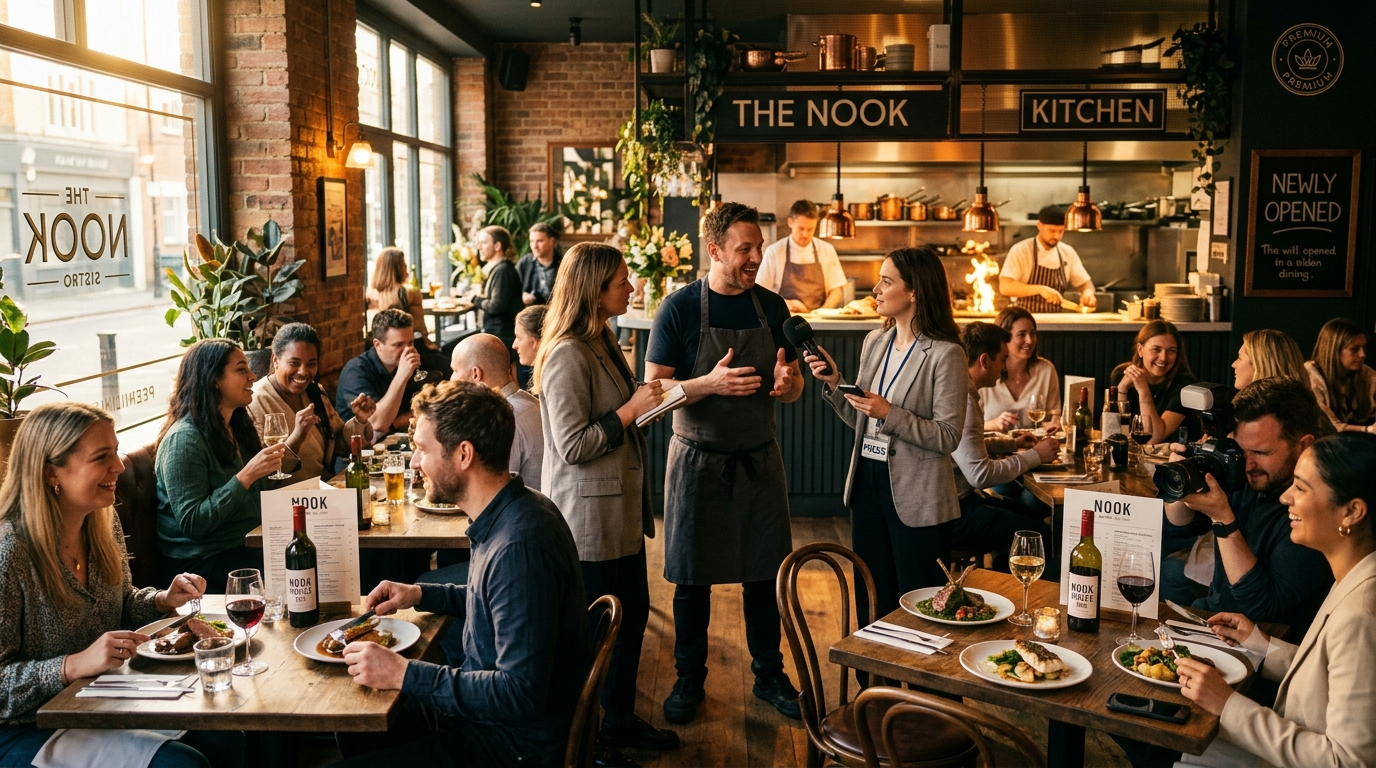
A well-run campaign in this genre typically delivers a fuller opening month, stronger local press coverage, and an early base of repeat diners who talk about the restaurant online.
Restaurant launch success is a local-first game before it’s ever a national one. The goal is a fully booked dining room in month one, not a viral moment that fades by month two.
Realistic measurement matters here too. Founders should track local press mentions, branded search interest in the weeks after opening, and the number of opening-month diners who actually return.
Those three signals, taken together, say far more than reservation numbers alone.
The Takeaway for Founders Considering This Approach
This modeled case study points to a broader lesson for any hospitality brand weighing its launch strategy. Borrowed methodology only works when the storytelling instinct behind it stays intact.
A Splendid Communications hospitality launch, whether applied to a national FMCG brand or a single neighborhood bistro, succeeds for the same underlying reason.
It treats the story as the product, and the food as the proof. Get that order right, and opening night stops being a gamble. It becomes the first chapter of a much longer story.
The genre changes. The mechanics rarely do.
That’s the real value of studying a documented methodology like this one, even without a single named restaurant case attached to it yet.